

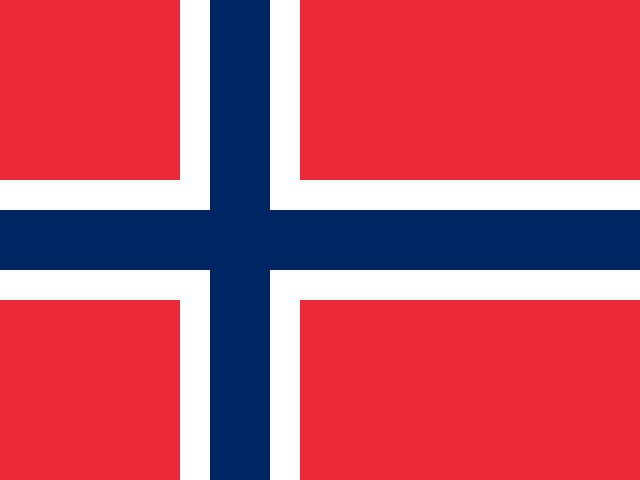
 Online Casino Licences in Norway





Norway does not operate a general commercial licensing system in which any foreign online casino can obtain permission simply by meeting an application checklist. Its framework gives Norsk Tipping and Norsk Rikstoto exclusive rights for specified gambling activities, alongside narrower arrangements for other permitted categories. Understanding those boundaries is more useful than counting regulatory badges on an international website.
For a Norwegian reader, the central question is whether the actual offer has Norwegian permission for the activity concerned. The company, product and legal basis must be examined together. A foreign licence can be genuine without authorising an offer directed at Norway. This guide explains the structure, official verification routes, payments, access restrictions and complaints using primary information checked on 6 November 2026. It distinguishes permission to operate from the practical ability to load a website or move money.
The current law continued the exclusive-rights model
Norway's current Gambling Act took effect on 1 January 2023, bringing together the preceding gambling legislation. The change did not introduce an open commercial online casino market. Government explanations describe continuity of the exclusive-rights model and stronger tools for oversight. An older article discussing separate lottery, gaming and totalisator laws may therefore explain the background while using a legal structure that no longer describes the present framework accurately.
Keep legislative dates separate from individual permissions and enforcement measures. A law being adopted, entering into force and being applied in a particular decision are different events. The introduction of a new enforcement tool also does not mean that the underlying gambling offer was lawful beforehand. When comparing historical material, establish what the source said at the time, then verify the present position through current official guidance and the relevant permission or decision.
Norsk Tipping and Norsk Rikstoto have different roles
Norsk Tipping's authorised offering includes number games, sports products and specified casino and other games. Norsk Rikstoto holds the exclusive right for horse betting. The Norwegian regulator explains that the exclusive-rights operators cover gambling requiring particular public control because of factors such as large prizes, turnover and the risk of gambling problems. Their names should not be treated as interchangeable labels for every kind of gambling in the country.
A practical enquiry starts by identifying the actual activity. A horse-betting product belongs to a different examination from an online casino game. The account contract and the applicable game rules should identify the responsible operator. A logo belonging to a technology partner does not create an additional Norwegian operator, and a distributor's involvement does not extend the permitted product scope. Read the operator's role before interpreting any claim that a business is part of the Norwegian regulated market.
Other permitted categories are limited in purpose and scope
The exclusive-rights model does not mean that every gambling activity outside those two operators is prohibited. Official guidance identifies arrangements for activities such as bingo, certain lotteries, the national poker championship and gambling on qualifying ships. Nonprofit organisations can have permissions within the relevant framework. These categories have defined conditions and should not be presented as an alternative route to operating an unrestricted online casino.
Consider a company helping to run bingo for approved organisations. Evidence of that role should be read in relation to the bingo activity and the organisations concerned. It does not establish permission for unrelated casino games marketed nationally under a different brand. The same principle applies to a narrowly authorised event. Check the activity, organiser, channel and period rather than relying on the simple fact that a business or organisation appears somewhere in an official register.
Use the gambling register for the question it can answer
The Norwegian regulator directs readers to the gambling register to check permitted organisations and approved bingo assistants. The register helps establish particular permissions and roles. It is not a list of every foreign casino that happens to accept Norwegian visitors. An international company absent from that register cannot resolve its status by pointing to a business registration or an unrelated foreign gambling licence.
Read the full entry relevant to the activity being examined. An organisation's eligibility, an assistant's approval and permission for a particular gambling operation need not mean the same thing. If the public record does not answer the precise question, ask the regulator or the identified operator for clarification. Retain the legal name and the date of the check. A screenshot showing only a search result is weaker evidence than the record explaining what the organisation is actually permitted to do.
The Norwegian approval mark is a useful starting signal
Lotteritilsynet says that gambling companies permitted to offer online gambling in Norway must display the official gambling mark on their websites or apps. It was introduced to help consumers recognise authorised offerings. The mark is useful in that context, but a copied image on an unrelated website cannot establish permission by itself. The identity of the service displaying it still needs to correspond with the official information.
Check the legal operator, product and address through the regulator's own information rather than trusting a badge merely because it looks convincing. A screenshot of a familiar app is also insufficient to identify the app currently installed on a device. Where the name, publisher or contract details differ, resolve the difference before treating the service as verified. Visual branding helps recognition, while the official record provides the stronger basis for a claim about authorisation.
A foreign licence remains evidence about a foreign framework
An overseas regulator may license an operator, a software supplier or both under different permissions. Those records can help establish who a company is and which activities the foreign authority supervises. They do not supply the Norwegian authorisation required for an offer directed at Norway. Norwegian-language support, amounts shown in NOK and acceptance of Norwegian contact details do not change the legal scope of the foreign document.
A reader should therefore separate two questions. Is the foreign licence genuine and relevant to the company making the claim, and does the actual offer have Norwegian permission? Confirming the first does not answer the second. Industry memberships, testing certificates and supplier contracts require the same careful reading. A studio that supplies Norsk Tipping has a commercial role in the authorised system, but that relationship does not give unrelated websites using its games equivalent Norwegian status.
Payment blocking concerns transactions in both directions
Norwegian banks and financial institutions are required to stop gambling transactions involving offers without Norwegian permission when the applicable conditions are met. The regulator's guidance covers stakes going out and winnings coming back. It also explains that using an intermediary or an incorrect merchant classification does not remove a gambling transaction from the prohibition. The rule concerns the underlying transaction, rather than only the logo visible at checkout.
A successful deposit is therefore not evidence of authorisation, and it does not guarantee that a later withdrawal will reach the customer's bank. When a payment is stopped, ask the financial institution for the reason and the status of that specific transfer. Preserve the date, amount, reference and recipient information. Do not treat a request to send money through another company as a routine solution before understanding the original restriction and the identity of the proposed recipient.
DNS blocking is a separate enforcement mechanism
Norway introduced DNS blocking of unauthorised gambling websites from 1 January 2025. The regulator issues decisions identifying sites to be blocked by internet providers. Its consumer guidance explains that visitors may reach an information page instead of the gambling site, while some technical arrangements can produce a connection or missing-page message. This concerns access to the website and is distinct from a bank stopping a payment.
The distinction matters when interpreting symptoms. A payment refusal does not establish that a site is subject to a DNS decision, and a blocked page does not prove that a particular transfer has been seized or returned. Equally, a website loading normally is not evidence that it has Norwegian permission. Check the relevant official information for the specific question. Avoid turning a technical observation from one connection into a broad claim about the legality or availability of the service.
A notice and a final blocking decision are different records
Enforcement often involves more than one published stage. A warning that the authority intends to act, a decision requiring a block and implementation by an internet provider are not the same event. The regulator may also report that a site changed its offer before a proposed block was imposed. That outcome should not be misdescribed as a licence being granted or as proof that the original offer complied with Norwegian rules.
When reporting a specific case, preserve the domain, company, decision date and procedural status. A list of proposed targets should not be merged with the list of implemented blocks. An appeal or later revision can also matter to the current position. If the available public material ends at an earlier stage, state that limit. Accurate reporting is possible without guessing the final outcome or assuming that a familiar brand name identifies every domain operated by a corporate group.
Account limits are product rules rather than financial advice
Norwegian authorised services use protective measures such as loss limits, time controls, breaks and exclusion. The precise settings can depend on the operator, product and customer's circumstances. Read the current account information and rules rather than copying a figure from an old review. A maximum permitted amount is a restriction on the service, not a recommendation that the customer can afford to lose that sum.
Keep the measures distinct when seeking help. A personal spending setting, a product maximum and a request for exclusion have different purposes. If a balance or remaining allowance seems wrong, ask which transactions and period were used in the calculation. If a requested exclusion appears not to have worked, preserve the request and the later event separately. The existence of a protective policy is relevant, but its actual operation in the individual case still requires evidence.
Payment records help distinguish delay from non-payment
An account can show a withdrawal as requested, approved or sent before the receiving bank shows a credit. These are separate stages. A useful complaint records the requested amount, time, transaction reference and the latest statement from the operator or bank. Where currency is involved, distinguish the operator's nominal amount from any conversion or fee applied later by a payment institution.
Do not assume that a delay proves fraud, or that an operator's internal confirmation proves the money arrived. Ask for a traceable explanation of the transfer and identify which institution currently holds or has rejected it. In a Norwegian context, a payment-blocking explanation should be examined separately from an ordinary processing delay. A clear chronology lets the parties address the actual transaction rather than exchange general assurances about banking speed or the company's foreign licence.
Follow the complaint route for the actual product
Begin a game or account complaint with the operator named in the contract. Consult the current customer rules promptly because procedures and deadlines can vary by product. State what happened, when it happened, the relevant game or transaction reference and what correction or explanation is requested. Keep the operator's reply together with the original evidence. A vague complaint about the entire service is harder to investigate than a specific disputed event.
A report to Lotteritilsynet about suspected unauthorised gambling or a regulatory failure is different from an automatic recovery of money. Nor should an administrative appeals body be assumed to resolve every private payment dispute. Ask which procedure applies to the decision or transaction concerned. Where an overseas operator is involved, any foreign complaint route must be checked for its actual remit and acceptance conditions. The presence of a regulator's logo does not promise that every customer claim will be adjudicated there.
Public supervision does not make an operator infallible
Official status establishes a legal and supervisory framework, not a guarantee that systems never fail. Norwegian authorities have published decisions concerning failures at Norsk Tipping, including issues with lottery draw procedures. Those records demonstrate why the details of a specific incident matter even when the operator is authorised. They should be read for the conduct, period and decision actually described, rather than used to support unrelated allegations about every game.
The reverse inference is equally weak. A documented problem with one process does not establish that every product is manipulated or that all customer balances are wrong. Examine the findings, the operator's response and any recorded follow-up independently. If remedial action is claimed, distinguish the announcement of a fix from evidence that the affected process was corrected. This approach allows serious problems to be reported accurately without treating legal status as immunity from scrutiny or an incident as proof of unlimited wrongdoing.
Keep permission, availability and evidence in separate columns
A complete assessment records the operator's legal identity, the product being offered, the basis of Norwegian permission and the date of verification. It separately records practical observations such as a website loading, a title appearing in a catalogue or a payment being accepted. Those observations can be useful, but they do not replace the permission question. A country directory and its filters are editorial tools, not an official register.
When information is incomplete, make the missing part explicit. A genuine foreign licence with no established Norwegian permission is different from a confirmed Norwegian authorisation. A proposed block is different from an implemented one, and a reported withdrawal is different from a received credit. Keeping these distinctions intact gives readers a clearer account of Norway's system and a more useful starting point for enquiries, complaints and decisions about their own exposure.